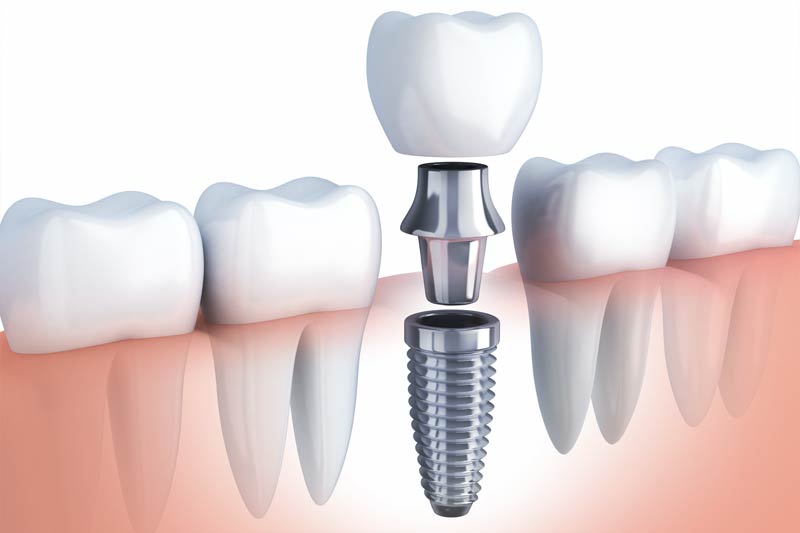
Minimally Invasive Tunnel Restorations in Bakersfield
At Bright Dental Care, Dr. Park believes in preserving healthy natural tooth structure whenever possible. His years of clinical experience, continuing education, and commitment to minimally invasive dentistry help guide his treatment philosophy and approach to patient care.
In selected cases, a minimally invasive tunnel restoration may allow decay between teeth to be treated while preserving more healthy tooth structure than traditional preparation methods.
Tunnel restorations are part of a minimally invasive approach to dentistry focused on treating disease while maintaining as much natural tooth structure as possible.
Clinical Case Example
The following photographs demonstrate an actual patient treated by Dr. Park using a minimally invasive tunnel restoration technique.
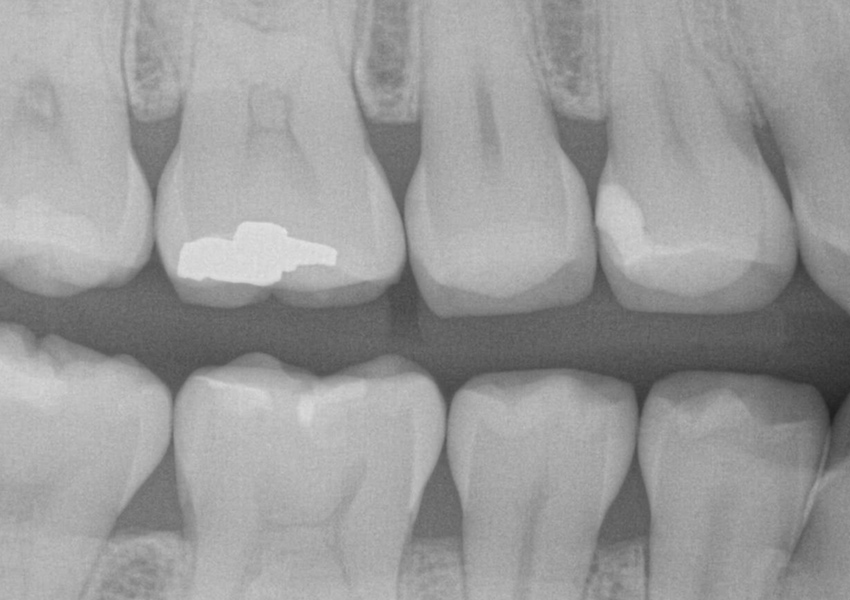
Image 1 – Initial Radiograph
Decay is identified between the teeth.
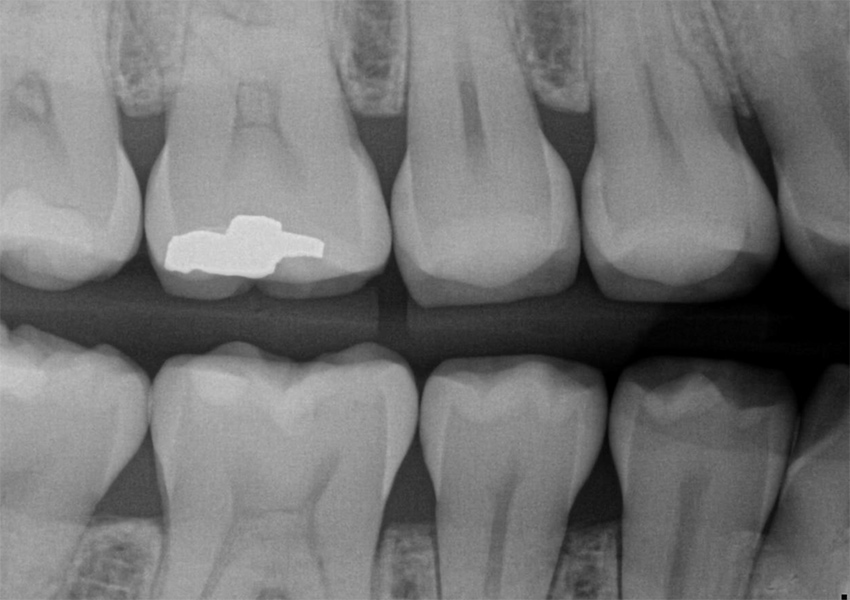
Image 2 – Access Preparation
A small access opening is created to reach the area of decay.
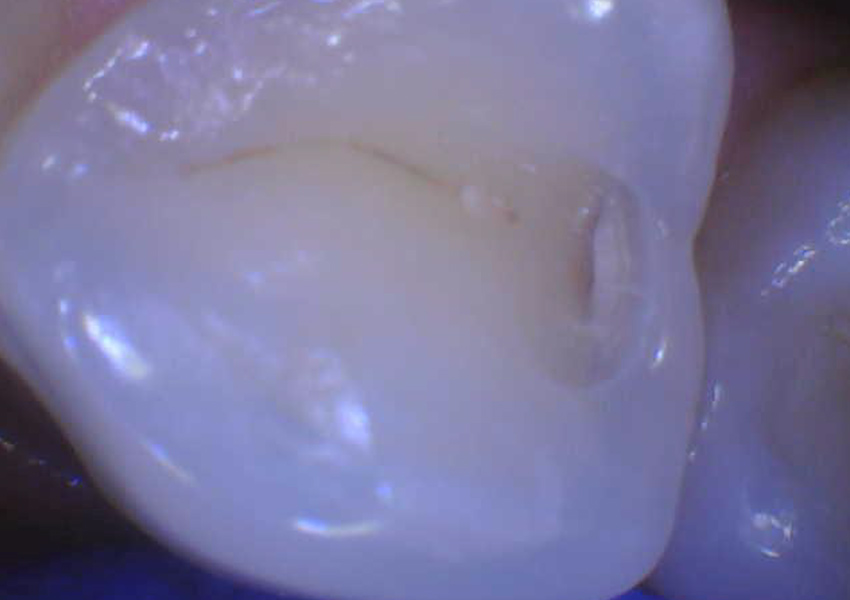
Image 3 – Decay Removal
The decay is carefully removed through the tunnel preparation.
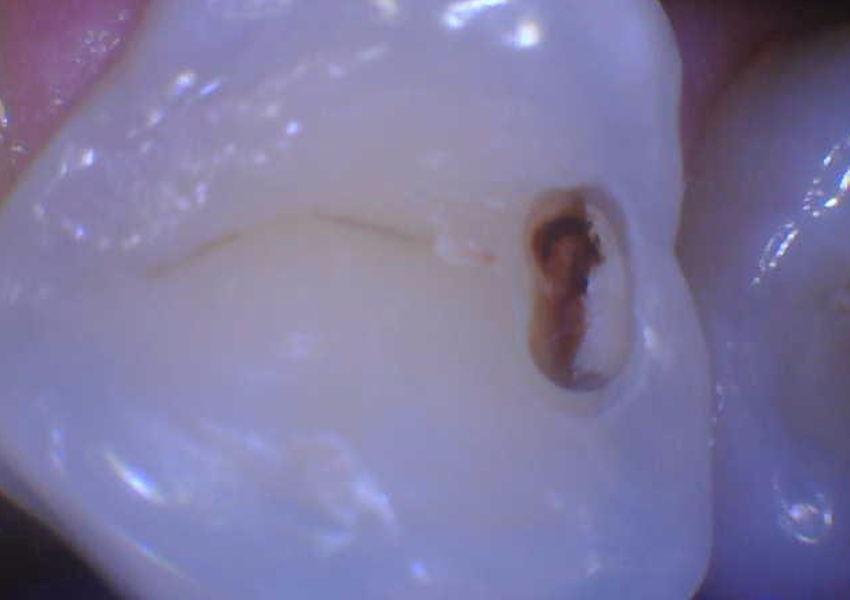
Image 4 – Preparation Complete
The tooth is prepared for restoration while preserving healthy surrounding tooth structure.
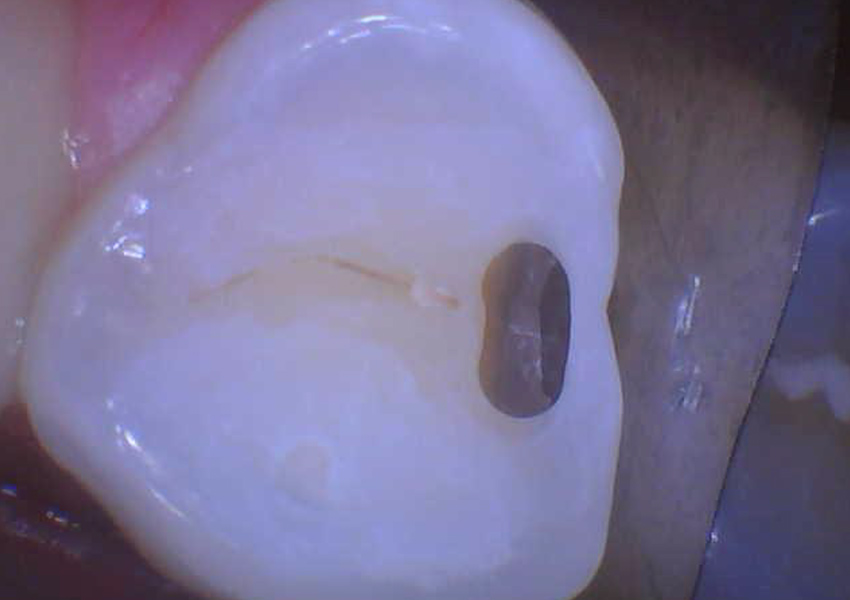
Image 5 – Final Restoration
The tooth is restored with a tooth-colored composite filling.
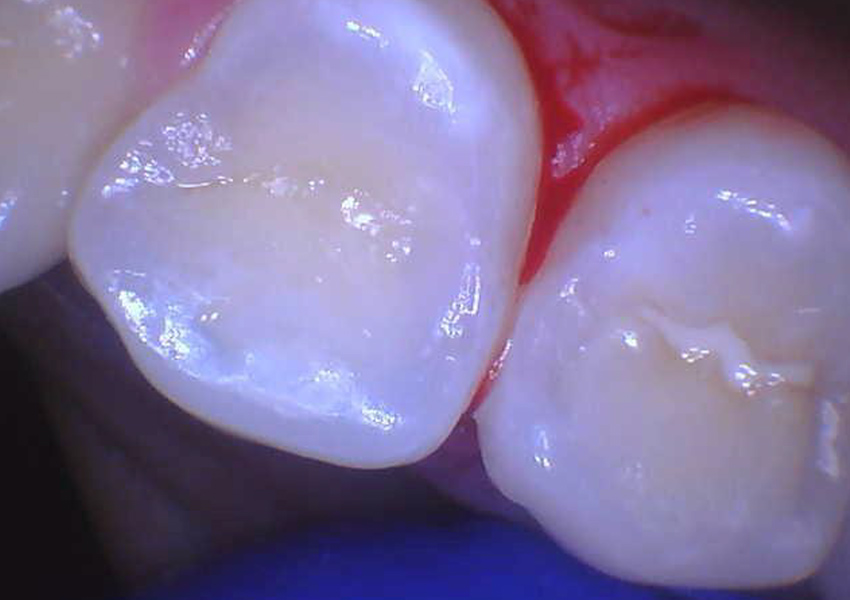
Image 6 – Final Radiograph
Post-treatment radiograph showing the completed restoration.
The Philosophy of Minimally Invasive Dentistry
Scientific studies have demonstrated that tunnel restorations can be a successful treatment option in carefully selected cases. By preserving healthy tooth structure whenever possible, minimally invasive techniques may help maintain the long-term strength, function, and appearance of natural teeth.
The photographs shown are from an actual patient treated by Dr. Park. Individual results may vary, and not every cavity is a candidate for tunnel restoration.
Click here to read in-depth information about the tunnel restoration procedure.